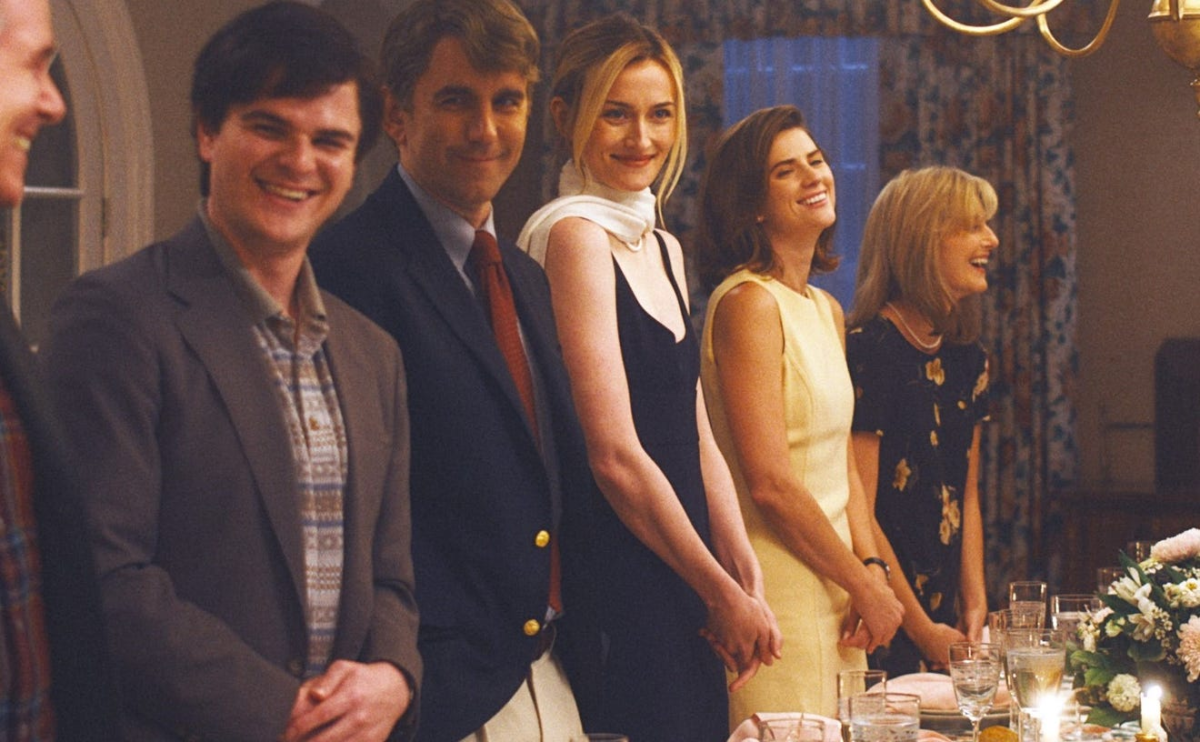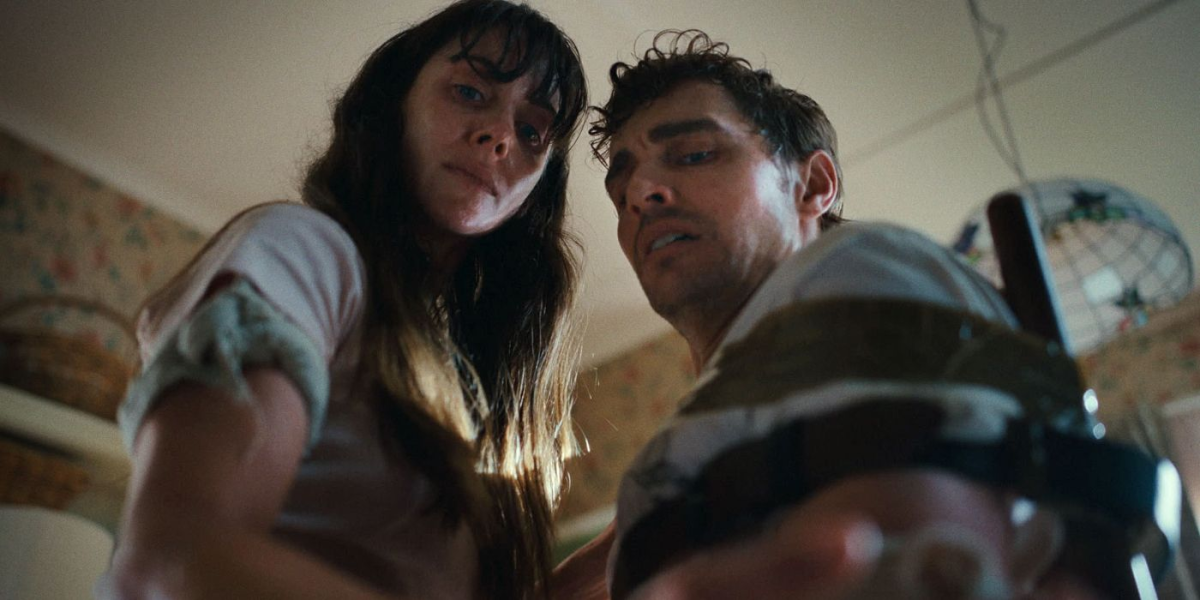
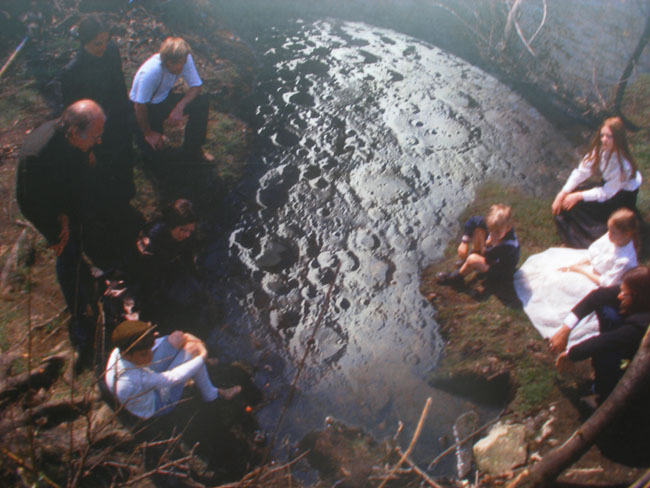
The (now bi-weekly) Kent Stater recently ran an article — and in their print issue, no less — simply entitled “The Death of Movie Theaters”. In picking up a copy at the stand in the lobby of the library the other week, I was naturally a bit appalled, having previously stood in line to attend a Halloween night Rocky Horror shadowcast at the Kent Stage downtown and braved unwanted commentary during an on-campus film club’s screening of Mulholland Drive. Going out to see a film is definitely something that Kent State students enjoy doing, though it’s on the Kent Plaza Cinema a short bus ride away to bring in better, more intellectually stimulating fare.
But, then again, maybe many students are simply unaware of the opportunities that lay before them to invest in creative cinema on big screens, evidenced by the lack of attendance by most anyone at the screening of Caligula at the Stage late last year, which certainly should’ve been an extra credit assignment for every fashion major. (Hopefully the recent announcement that the Fashion Museum on campus is going to be screening free films will keep such faux pas from happening again.) Also, venues such as the Nightlight lie in Akron, which requires knowing someone who has a car, and I have known people on this campus who own a car who are not very nice or inviting (though given the continued reputation of Parking Services, I cannot help but feel bad for them).
Also in Akron is the Rubicon Cinema is a monthly film series I was completely unaware of until the May 4 Visitors Center’s recent collaboration with them, a screening of three films from the seventies by retired Kent State film professor Richard Myers. The series is hosted not in a traditional theater but a pottery studio nestled in a cozy suburb off Highland Square, filled with fascinating pieces of art made by the married couple who owns it. Nor was Myers’ own Tuesday Cinema club back in the day, which hopped around from the building now known as the Center for the Visual Arts, Oscar Ritchie Hall, and occasionally the auditorium in Cartwright. History was here, little golden flash, and now you are.
Myers perchance knew this better than any of the creatives to come out of Kent State. The night’s headliner, Deathstyles, began life as Lifestyles, its name change occurring after the shootings on campus rocked the director during its production. Incensed by the misinformation about the tragedy, he utilized footage shot by him and his students of the weekend leading up to Monday, May 4 and interviews with townspeople and students to create the documentary Confrontation at Kent State, which proceeded to be shown at college campuses and film festivals across the country. Now, it had returned to its home base as the first film of the night, with the wildly varying interpretations from townspeople who were not there angering many seated around me, some of whom were witnesses to the shootings themselves. From my detached vantage point of being born decades later, I was admittedly most fascinated by the sheer variety of opinion on who was to blame, and the other little details — such as the uncertainty as to whether or not there was an order to shoot, which has since been proven to have occurred with the unearthing of the Strubbe tape in 2010.
I was also morbidly curious about the perspectives of concerned mothers who defended the Guard while their little children stood by their sides, and both I and Visitors Center director Alison Caplan were fascinated by the black armbands worn by two decidedly pro-Rhodes mothers, given the accessory’s association with anti-war protest. Why they were wearing them remains completely unknown.
Following Confrontation was Allison, a short film composed after Myers’ students realized they had captured May 4 victim Allison Krause in life by complete chance. The image of her helping hold up a banner at the anti-war moratorium march that went through Kent the fall before the shootings are preserved and prominent at the Visitors Center. The footage of it in this film, soundtracked by her father Arthur reading an open letter to President Richard Nixon and a poem written in his daughter’s honor, adds a new anti-staticity to the still frames. What hit me most, however, was footage of her dancing at a rock concert on campus. The people around me and I later eagerly debated whether one shot showed the Measles, Joe Walsh’s old band, but I was much more than starstruck to see moving footage of her in that environment, so vulnerable and free.
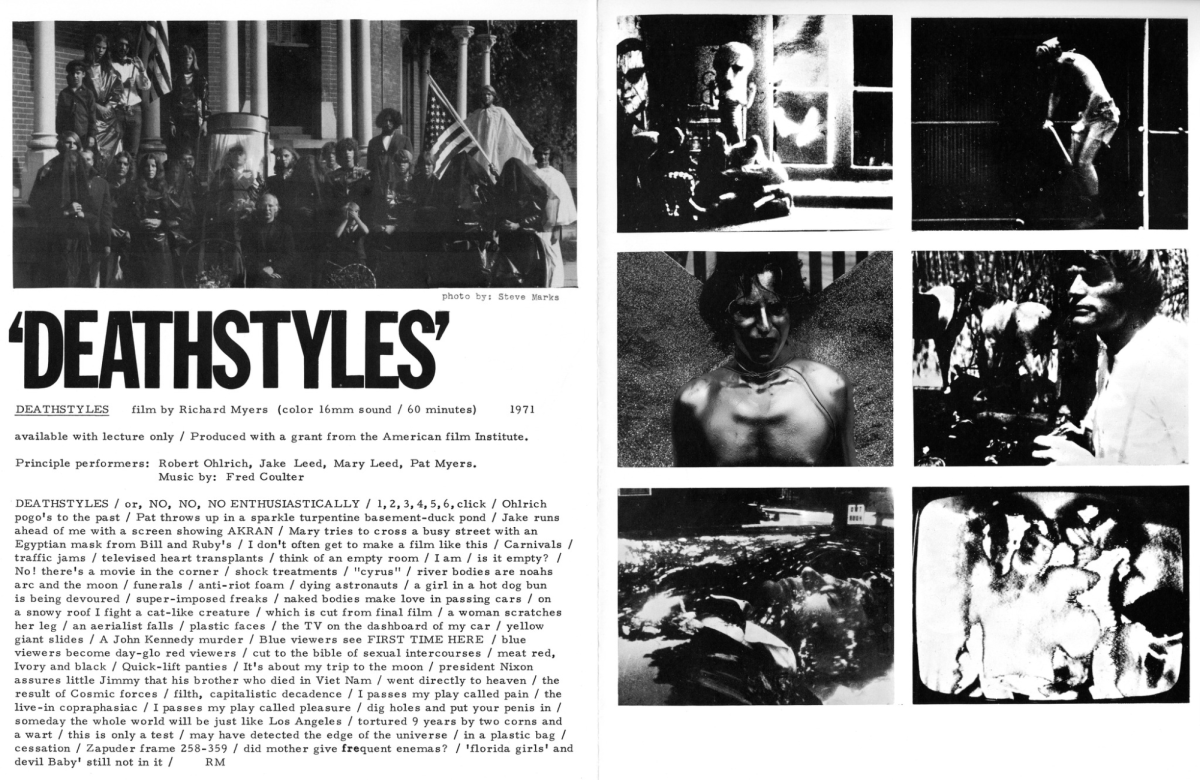
And then there was Deathstyles, in which Kent State students served as extras, and I heard from attendees some great stories of interpersonal drama regarding the female lead, who dated just about everyone who was anyone on campus at the time. The screening’s promotional materials made it notable that Chris Butler appears in the film; before he was rocking out with the Waitresses, Tin Huey, and more, he was rocking silver face paint in a penultimate scene, though the manner in which the sequence was shot made him difficult to make out. I was, however, able to catch Jerry Casale, who went on to co-found Devo, in the split second during which he appears, instantly recognizable by his pairing of round sunglasses and an awful bowl cut.
The influence of much of Deathstyles’ first half on Devo is strikingly obvious, and it is no wonder that Casale has given Myers his flowers in the past. Myers pastiches together with rapid-fire precision his blond-haired hero’s dead body in precession, discussion of venereal disease, the creation of a sex manual, the kooky owners of a costume shop, fish, the Zapruder film, and, of course, the Kent State shootings. Blips of “Crimson and Clover” and “Spirit in the Sky”, zombie-ish ebbing remnants of a more innocent time, pop up on the hero’s radio as he fiddles the knob on his car’s dashboard, flipping through channels on the built-in television.
Deathstyles overall is about one man’s frustration with societal overload and his futile attempts at escaping it. At first capturing the world as a filmmaker himself, no matter what he does, he cannot shake that there is always an image within the image he is perceiving, technological junk and wires behind the too-pretty faces. In the pool a pioneer family peers into, there is not just the water but the sky, the stars, the surface of the moon; the girl he chases after, despite being reduced to her body, contains damning multitudes. In everything, there is infinite possibility, but the realization of that is often too much for one to handle.
It is fitting, then, that the film ends on nothing resembling the bombastic conclusion I felt it should’ve built up to. All it is is bandages and greenish scritch-scratch television static, a more pallored and abstract version of the old, fat security television still running in the abandoned bank in a strip mall in my hometown. It was quite anticlimactic, and some of its sequences simply drolled along for longer than they should’ve. However, it is still a striking film and worth seeing. Richard Myers may be almost ninety (and unfortunately was a no-show, and Butler had the flu) but Deathstyles feels to me infinitely more relevant than the offensive slew of anti-youth films that have become part and parcel in mainstream cinema today (Emerald Fennell certainly had every opportunity to cast a fresh-faced newcomer instead of a thirty-five-year-old Barbie doll in her most recent film, and modern artists in general have a grating tendency to spoon-feed their audiences meaning over facilitating individual education).
Too, Myers’ film proves the sheer vastness of American culture, or, more precisely, a niche manifestation of Americana (Ohioana?). In juxtaposing JFK with Troop G of the Ohio National Guard, Deathstyles asserts as a hidden thesis that the Kent of the sixties and early seventies is America, in its own, microcosmic way, incapable of being torn down by nationally-known bloodshed. In a dreadfully globalized world, it can often seem like culture only exists in big cities or on the internet, or that America simply lacks culture, as that culture has been consistently defined by such landscapes as Breezewood, Pennsylvania, or frozen-in-time McDonald’s establishments where the barstools are still shaped by dead-eyed cartoon burgers. What such commentators fail to realize is that culture exists in pockets — in small communities, gestating out of the public eye, much like Myers’ Tuesday Cinema and Devo and Joe Walsh and the art gallery Allison Krause wanted to open someday and all the great art that’s come out of Kent. Whether the pundits comparing recent events to May 4, 1970 have the guts to reach out to and give platform to actual Kent State students, the ranks of which currently include many artists, activists, et cetera, has yet to be seen. For now, we can continue to develop our individual crafts until our generation is ready to make its formal debut in the straight-world, peacefully knowing that namelessness, not ignorance, is often the most blissful state of all. The biggest challenge for us thus far is to resist the allure of statelessness.
Photos sourced from the May 4 Visitors Center’s Facebook page. Read more information about Richard Myers