Last week, honoring fifty(-plus-one) years since its premiere, Ken Russell’s film of the Who’s 1969 rock opera Tommy made its return to theaters, gracing the IMAX screen for the first time. For two nights only, moviegoers across America, hopefully with earplugs in tow, experienced the technicolor ‘amazing journey’ in what is likely the closest modern technology can get to its original release, given its unique Quintaphonic multitrack sound system.
Unfortunately, when I saw the film on March 18 at the Regal Crocker Park in Cleveland, there were not too many people there. Despite the city’s rock-and-roll reputation and the possibility that the previous night’s showing worked better for all the Who fans’ schedules, it makes sense: the tone of the film was succinctly summarized the day before I saw the film by one of my English professors, who proclaimed to me in his unique pseudo-Southern accent, “Thas’sa WEEYRRDD movie!” Being in the process of researching the opera as a whole for my thesis, I decided to put this reputation to the test — or, rather, convince a good friend of mine, who had never seen the film, to take me, because not only did I simply have to be there, I don’t have a car.
My friend — who also happens to be one of my greatest sounding boards for my thesis — was around and conscious when the film came out, but he was too immersed in jazz to care much about rock music until many years later. He does, however, appreciate cinema, with his second statement after the film ended being positive comparisons to the works of Fellini and Bergman. (His first was an appropriate admission that the film was “really far out, man”.)
We had the following discussion about the matter over the course of two days, which began with our mutual complaints about the really soul-crushing parade of advertisements — mostly for candy and Disney World — and uninspiring trailers that preceded the film and him not realizing it was Ann-Margaret playing the title character’s mother.
Have I cleared up the beginning for you?
Um, well, why would they — why were they killing his biological father?
Because he walks in on his wife screwing another guy, and he got mad, so the lover killed him!
Oh. I — I didn’t catch that at all. But you know so much more about the whole thing —
The thing is — that’s interesting is that, that part confuses my dad, too.
Oh, yeah?
Yeah.
And another thing is — the mother, after his [Tommy’s] success, why’d she go nuts? She started smearing herself with shit [not literal] and everything — why?
In my interpretation — I don’t know, I feel like she got jealous of all the fame that her son was attaining, and that’s kind of what drove her crazy — on top of all the spoils of fame, the excess of it. That’s my personal interpretation.
I can see that, but I don’t know!… Yeah, there was a Wendy’s commercial in there, commercial for Pepsi, god…
[laughs] It was very cynical!
The trailers?
Yes!
Oh yeah, well, it was terrible!…
What are some of the aspects you didn’t like about the film?
Well, his face, before he started to get a little animated, it was the same in every shot, and it started annoying me a little bit!
Ah!
It wasn’t terrible or anything, it was just the — and then, there was… Tina Turner — when he was getting the, the spell cast out of him, so to speak, she went into this really long [scene]… I mean, it was okay, except — to put something that long in that space, I was trying to see how it related to the story… I mean, by itself I dug it, you know.
Yeah — the church scene, I always felt like that one was long, and it was quite noticeable watching it this time, it was very long!
There was one scene where, um, he’s climbing up and down some rubble in a junkyard, and he comes across — bumps into and runs across tons of, like, appliances… like, dryers and washing machines and stuff, and he was knocking it all over the place — I just thought that was a really cool scene.
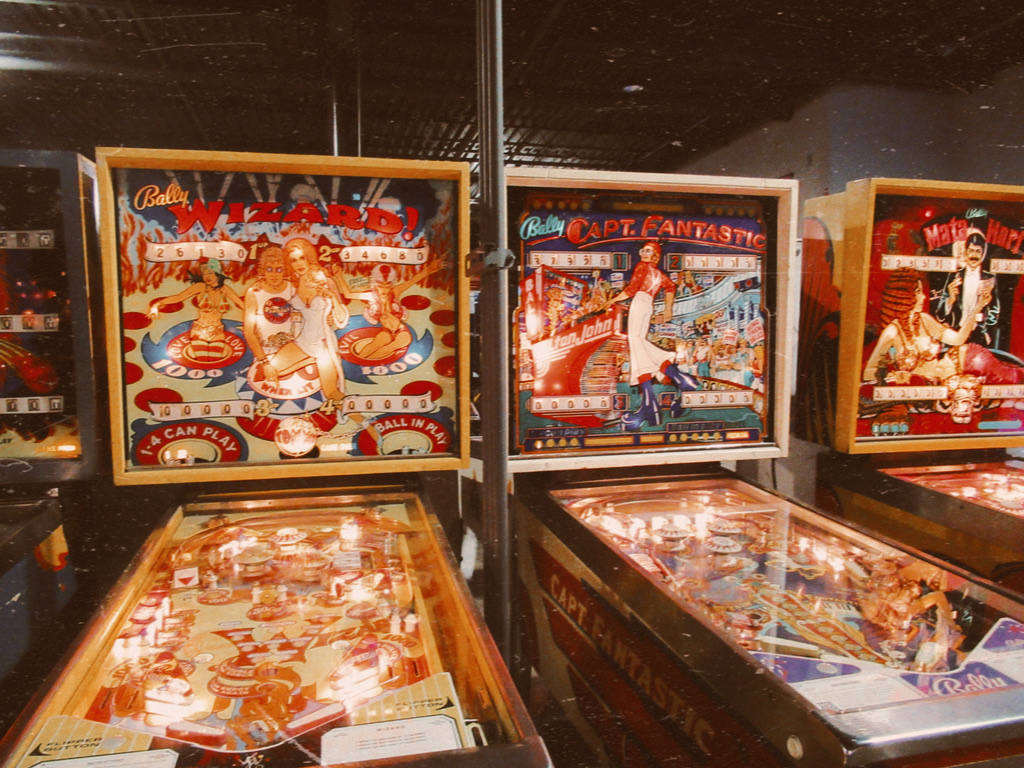
That’s one of my favorites… and it’s because, it’s like a literal self-discovery-type scene. He’s literally chasing after himself, and then he finds the pinball machine and he finds himself in it, he finds simulation in it.
Right. I think — now there’s a part that could’ve gone on a little longer, because I think to me he fell into the pinball machine too quickly.
I always thought that scene was perfectly timed, personally.
Well, in terms of how it’s filmed, it’s really nice. I was just talking about the timing.
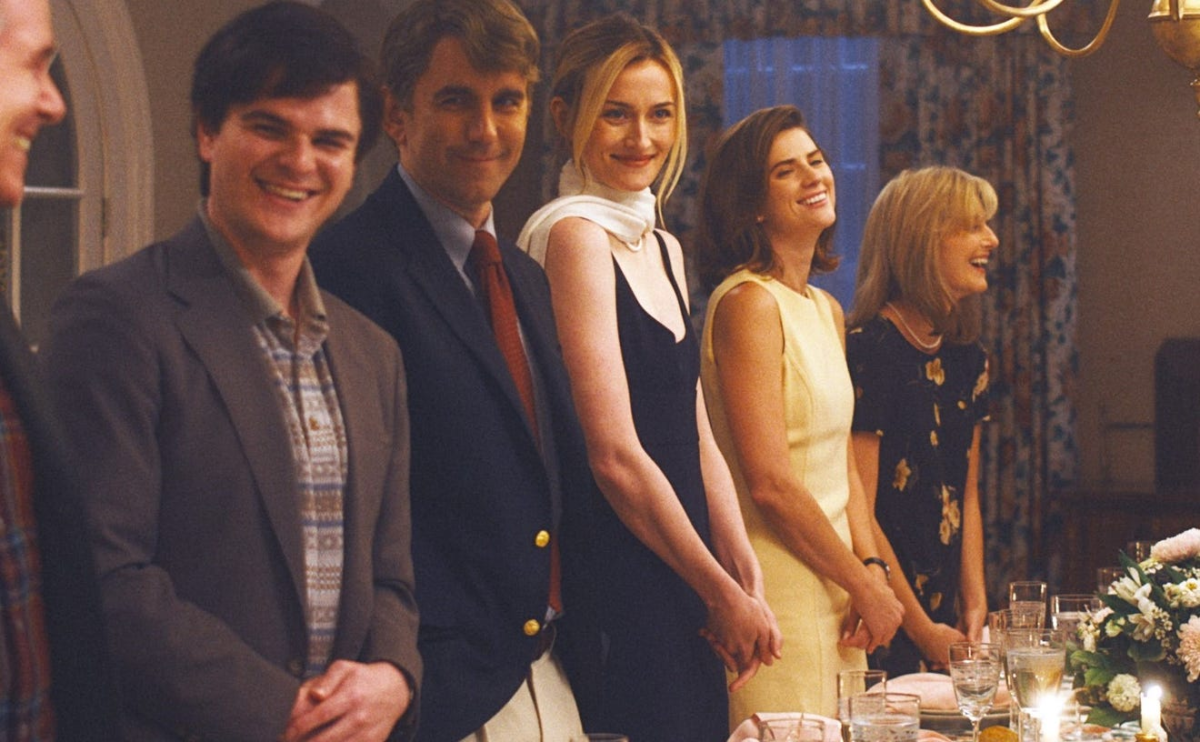
I really noticed how much detail Ken Russell puts into his films, just the sheer amount of — I really noticed, with how big the screen was, just how every shot was so well composed.
Oh yeah. That hit me right off the bat. Right from the opening scenes… and at first I didn’t like the operatic singing at first, just right away, and then I went, ‘wait a minute! This is an opera! They’re supposed to be singing!’ And then it sort of clicked in for me.
The guy that played his, um, uncle or father, whatever you want to call it —
Oliver Reed.
Was that Oliver Reed?
Yes!
I’ll be darned — um, I don’t know if that was the best match. But it was okay, it was good.
That’s one of the things people say about the film, that he can’t sing, but I think it’s perfect for the character.
Yeah, I can see that, too. He grew on me, as the film progressed…
What other sequences in the film did you like?
God! There were so many! I can’t bring up the sequences so much as not understanding why something was happening… that’s a lot to digest… yeah, a crucifix with a pinball on top, I get that, but where does the crucifix come in?
Because they’re worshipping him like he was Jesus, and there’s that kind of messiah metaphor of him sacrificing himself.
Oh, okay. I can see that…
…Whoo, my brain is frying a little bit right now…
Well, that, you know — it’s taxing!
That’s a good word.
You’ve got all these different things happening at the same time! You know — color combinations, music, acting, singing, all these…
What was your least favorite part?
Well, there weren’t any parts that I didn’t like specifically, but there were parts I thought were too long, and that made it not as comfortable for me as it could be. So I could say I didn’t like that scene even if I did like it… [There were so many different textures and] different colors, and [the scenes] weren’t all coordinated, but they were different. It was really cool.
It’s like every scene is its own little world, in a way.
Yeah… every scene could’ve been by itself, almost.
I mean, people kind of see it as a predecessor to music videos… which, music videos existed at the time for, like, television shows where bands couldn’t make a date to perform, so they’d just lip-sync a video instead and send it in. But it really predated that by quite a few years, how we perceive music videos now.
And there’s plenty of metaphors… The opening scenes actually reminded me of a short story I once read… a man lived in the outskirts of London, in one of those little burghs, and a house out in a field, him and his wife lived there, and he became a pilot in the R.A.F. And he went off one night and got into a dogfight with a German and got shot down — and his plane dived down into the house that his wife lived in and killed her. Weird story.
Interesting. I wouldn’t know it… I was really fascinated by your saying that you were surprised no-one had recommended the film to you before. And said, “this is this great work of cinema” —
No, no-one ever did.
From what I understand, in a lot of ways, it’s very insular to Who fans or people who are into just very ‘out-there’ seventies cinema in general.
Well, that’s a big part there, for me. And like I told you, when the movie first opened and they started singing, I go, ‘oh, this is fucked up’, and then I was going, ‘wait a minute, this is perfect! I see,’ I understood.
A lot of Who fans are really polarized about it.
Who?
Who fans.
Oh, ‘Who fans’! Okay. Sounded like one word, and I go, ‘what’s a whofin’…
Who fans are really struck by that film. Either they think it’s fantastic and a masterpiece or they absolutely hate it.
What do they hate about it?
Just how outrageous it is. The original album, you know, it was so spiritual and minimalist and contemplative. The film, in a lot of ways, even though it’s saying the same thing, is the exact opposite in manners.
Well, it’s very complex, too. I mean, nothing is exactly clear-cut, a lot of things that were not —
There’s so much room for interpretation —
Exactly.
— both in the film and the original album. People, they fill in their own blanks, and they kind of let that guide how they perceive it when it ends up in someone else’s hands.
I haven’t heard that album in a long time. I hear pieces of it a lot, but I haven’t sat down and listened to it.
I mean, when I first heard it, I guess I learned that there was a film, but I never thought about it or even considered watching it, back when I was little and I just had the album.
Huh. Well, are you talking, like, eight, nine years old, something like that?
Yeah.
Well, you know, there’s things in your brain that hadn’t even started developing yet. And, you know, you’re definitely going to look at things from a different perspective… I can’t tell you what scenes they were, but there were a couple scenes in the movie where these patterns overlapped — of, like, material or other things — that really hit me. But I can’t tell you where I saw them. [Like] in the transition from one thing to another. You know, it’s kind of interesting how your writing… how you approach the rise and fall of things. That was a good term to use, rise and fall of things, because it applies to both music and writing.
Another thing about the film is that it had a sense of humor. I think that’s another thing that probably jars people, or it turns them off. When you think of ‘classic cinema’, you think of something that’s totally serious, and you can boast about it. But something so out there, it’s almost uncomfortable to say, ‘this is a masterpiece’.
Yeah, because you’re held liable. It’s almost like telling somebody a secret, and you’re saying, ‘this is only for you to know, I don’t want those other people to know’.
It’s a guilty pleasure. And with Tommy, you know, there’s so many really dark themes, and it applies the same emotional, visual exaggeration to everything, regardless of how serious the topic itself is.
Right. If you were talking about painting, there’s watercolor, oil paints, gouache, tempera, all these different kinds and ways to put something on a canvas — well, there’s a lot of those involved in that that made it what it was. Sort of like different brush strokes.
Where I run into a lot of trouble is, um, some things you know, but a lot of things I can see both sides of the coin. You know, someone will say, “well, how do you feel about that?”, and I can’t answer it, because I feel two different ways about it — I can see that side of the thing and I understand it, and I can see the other side, and I understand that, so I can’t make a black and white decision about it. It’s just a thing… So many of those things, when you start talking about that, they’re metaphysical and very hard to pin-point, because one particular thing can have three different meanings to it, so it’s difficult to talk about, because I could say something and you don’t know the meaning that I’ve got in mind. And on the other hand, it could be the exact same, too.
I sort of got into that idea with color theory: okay, everybody knows that that’s green, there’s not any question about it, but whether anybody sees that same color green that you and I see is a completely different story. There’s so much going on around us, and sometimes it’s really hard to explain what you mean when there’s no specific, concrete — what you base your thoughts off of aren’t necessarily concrete ideas. Some of them are kind of flexible. In fact, we’re all kind of flexible, actually.