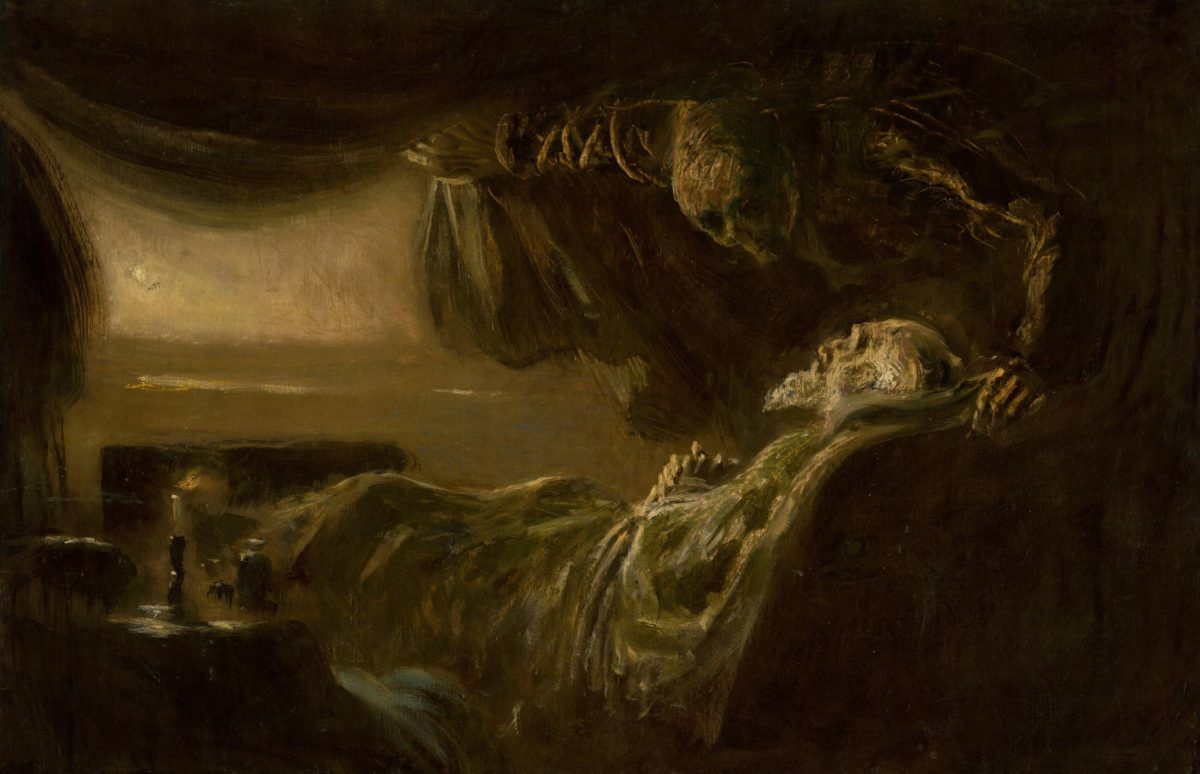
There are plenty of mainstream movies centered around haunted art or objects, and certainly you’ve seen some of them; think Child’s Play (1988), The Painted (2024), or even The Babadook (2014). These dolls, paintings, and books are fictional, of course, but what if they were real? Here is a list of four allegedly cursed or superstitious art pieces to keep you on your toes the next time you visit your local museum or community theater.

Edwin Landseer’s Man Proposes, God Disposes (1864): Perhaps one of the most notorious cursed paintings in the world, Edwin Landseer’s Man Proposes, God Disposes resides in Royal Holloway, University of London in London, England. As reported by The Curious Archive, Landseer based this painting on Captain John Franklin’s 1845 naval expedition to the Northwest Passage of the Canadian Arctic. Roughly a year into their voyage, the captain and his crew were trapped in ice near King William Island, where Franklin had died and the crew wandered off into the Canadian Arctic, never to return home. The painting itself is chilling, depicting polar bears violently scavenging in the wreckage of the ship, one tearing the sail, and the other eating human bones. The implication of the painting is that no matter what a human desires, God’s plans ultimately prevail.
The students at Royal Holloway aren’t particularly fond of this painting, and haven’t been since its original appearance in the halls. In the 1970s, a student refused to sit near the painting during an exam, and this sparked the superstition that students would lose their mind if they looked into the eyes of the polar bear. It is believed that some students ended their own lives as a result of making this mistake. Now, during every exam season, the Union Jack covers the painting to prevent the curse that Landseer’s painting brought from living on.
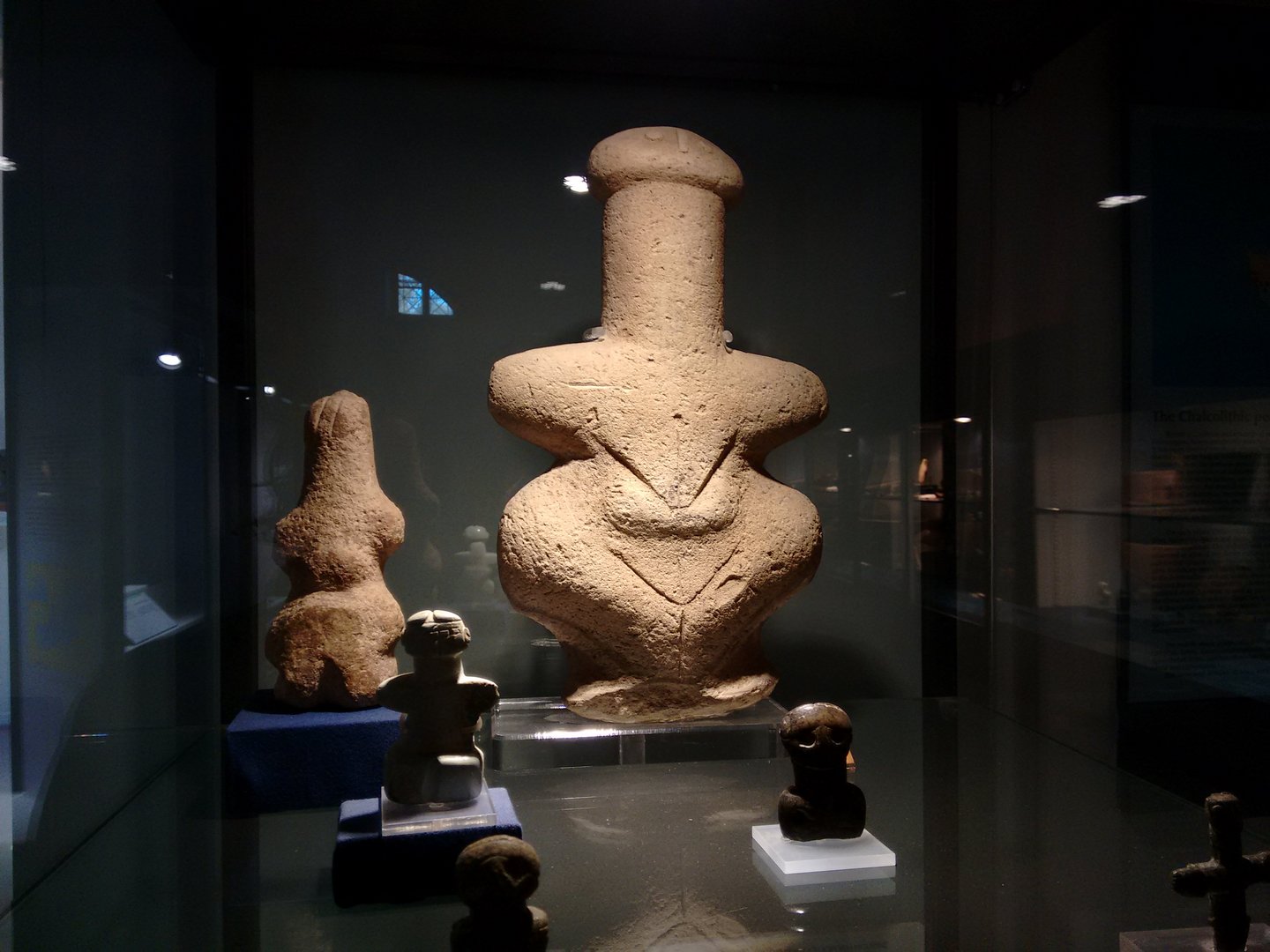
Unknown sculptor’s Woman from Lemb: There are many statues throughout the world that are allegedly possessed, cursed, or haunted, though this one is slightly lesser known. According to TVI, The Woman from Lemb, better known as the Goddess of Death, is a 14-inch limestone statue of a woman with short outstretched arms, a high neck, pronounced hips, and a head that is facing upward, found in Lemb, Cyprus in 1878. No one is certain who exactly sculpted this statue, though it is assumed that it was crafted around the Chalcolithic period—roughly 3500 BCE. It was more than likely made to be a fertility idol or protective deity, though scholars aren’t entirely sure, as there is no concrete evidence.
Perhaps the more interesting history surrounding this piece of artwork is the unexplained deaths and tragedies suffered by the owners. Within six years, every family member of the first owner, Lord Elphont, had died inexplicably. It was then passed to numerous other families, including those of Ivor Manucci and Lord Thompson Noel, who had experienced the same tragedies as Elphont. These occurrences are, of course, the reason behind its nickname. After these patterns continued, no one had volunteered to bring the statue into their home, and it was eventually donated to a museum, where it still resides today. Visitors are often still leery of it as they pass by during their time at the museum, and some try to avoid it entirely.
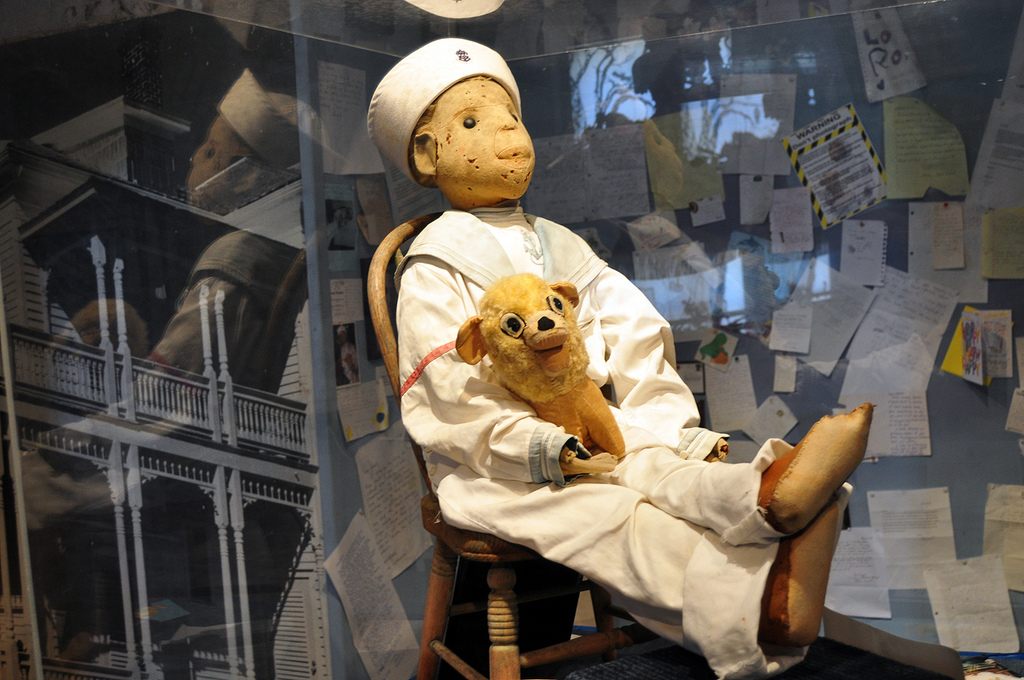
Eugene Robert Otto’s cloth doll, Robert: Everybody knows the story of Annabelle, but have you heard the story of her predecessor? Robert is a very simple cloth doll (who, fun fact, still exists today!) that is thought to be hexed, bringing terror to the children who possess it. As researched by Ghouls and Gravestones, it was a handmade craft by a servant in the 1800s and originally gifted to a young boy who lived in the household she worked in, and his name was Eugene Robert “Gene” Otto. It is widely believed that the servant was mistreated, causing her to hex the doll using black magic to punish the family. When Gene came into possession of the doll, strange happenings ensued. His parents often heard him having a conversation with a voice they didn’t recognize, his furniture would often be moved with no explanation, and Gene would cry with fear in the night for seemingly no reason. After all of these events, the parents would come in to find the doll sitting menacingly at the foot of his bed.
In Gene’s adult life, Robert resided in his attic, though the antics never came to a halt. Neighboring children claimed that Robert mocked them from the window, and Gene would often hear the sounds of footsteps and ghastly giggling coming from up the stairs. Despite this, he continued to insist on keeping the doll throughout the rest of his life, and when he later passed away, it was left in his old home. A new family came to find Robert, and the chaos began all over again. The new little girl in possession of the doll was quickly put off; she claimed that he would move in her room throughout the night and sought out to harm her. Her parents quickly got rid of the doll, and there is minimal information available about what happened after this. Robert now resides in a museum in Key West, Florida, where many haunted or cursed items go for visitors to see. Despite being locked in a glass case, its presence brings an eeriness to all those who pass by. Would you go visit Robert?

Shakespeare’s play, Macbeth (1623): Theatre nerds may already know this one, but let me explain anyhow for those who don’t. Macbeth, one of Shakespeare’s many plays, is considered to be one of his darkest tragedies and was written around the time James I became the king of England. As reported by The Royal Shakespeare Company, this particular king was known for his obsession with all things occult, and as one would expect, his subjects were eager to please. Shakespeare was one of those subjects, and it is thought that the original version of this play included real spells and incantations. This then allegedly upset a group of witches, prompting them to place a curse upon the play, and all went downhill from there.
Despite not being a physical piece of art, uttering the word “Macbeth” in reference to the play is thought to bring bad luck to theatrical performances due to the aforementioned curse. The first production of Macbeth itself was supposedly plagued by deaths of multiple actors during the live performance, and following productions were riddled with other misfortunes such as light fixtures and stage weights falling, actors tumbling off the stage, and fires. It has evolved into what crews and theatregoers call “the play that shall not be named.” No matter what play is being performed, the name of this particular one should not be uttered until everybody has exited the theatre and the production is finished. Many playhouses have reported the occurrence of otherwise unexplained events after someone had said the word “Macbeth” during or before the show began. Moral of the story? Never say this word in a theatre. You will have some very unhappy crew members on your hands.
Whether or not these happenings are coincidental or real curses remains up to you. Maybe these superstitions and fears were the artists’ goals. I suppose we’ll never truly know. Happy Friday the 13th, and remember: minimal eye contact with dolls and polar bears, and no Shakespeare references at your local theater. You’re welcome.
Cover Photo by Europeana on Unsplash